When the Bag Does a Runner: Twenty Memory Hooks for Lost Property Desks
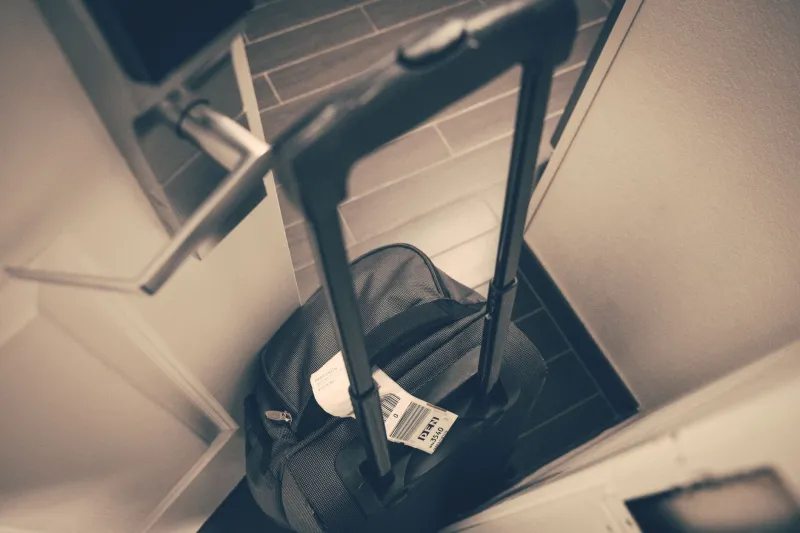
A bag goes missing and your brain, annoyingly, decides to forget every word it ever knew. The answer is not to revise a grammar book on the pavement. It is to have a small set of phrases so vivid that they surface before the panic does. Linkwords do that job: they pin a foreign word to a daft, sticky image. Here are twenty hooks for the lost property desk, plus a few sentences to stitch them together.
Start with the calm sentence
Before you describe the bag, you need the question that opens doors. In Spanish: ¿Han encontrado una bolsa? In French: Avez-vous trouvé un sac ? In Italian: Avete trovato una borsa? They all mean 'have you found a bag?' The hooks are simple. Spanish han sounds like a hen that has found an egg. French avez-vous is 'have you' with a polite shrug. Italian avete is the same idea with a coffee in hand. Say it slowly, show your hands, and add the colour or type of bag as soon as you can.
The twenty hooks
- La bolsa / le sac / la borsa — bag. Spanish bolsa is a bowl-shaped shopping bag; French sac is literally a sack; Italian borsa is the bag you clutch like a boss.
- El teléfono / le téléphone / il telefono — phone. The triplet is almost a freebie; imagine your phone ringing in three languages at once.
- El pasaporte / le passeport / il passaporto — passport. A pass to the port. Keep it in the hotel safe, not the beach bag.
- La cartera / le portefeuille / il portafoglio — wallet. Spanish cartera: the wallet left in the car? French portefeuille: it carries leaves of paper money. Italian portafoglio: same sheet-carrying idea.
- Las llaves / les clés / le chiavi — keys. Spanish llaves sounds like a bunch jangling in a yard; French clés is clay, as in keys made of clay; Italian chiavi is key-ah-vee, the keys to a tiny Fiat.
- Negro / noir / nero — black. Spanish negro is black night; French noir is film-noir darkness; Italian nero puts you in mind of Nero, fiddling in the dark.
- Azul / bleu / blu — blue. Spanish azul is a jewel of blue; French bleu is nearly blue; Italian blu is blue with the e knocked off.
- Rojo / rouge / rosso — red. Spanish rojo is red-hot; French rouge is lipstick red; Italian rosso is a rosé that forgot to be pale.
- Verde / vert / verde — green. Spanish and Italian verde are verdant; French vert is green with a very upright little t.
- Gris / gris / grigio — grey. Spanish and French gris are grizzly-bear grey; Italian grigio is pinot grigio, the greyish grape.
- La estación / la gare / la stazione — station. Spanish estación is a station; French gare is the big train shed; Italian stazione is the same root with a bounce.
- El tren / le train / il treno — train. Keep the o for Italian and you are aboard.
- El taxi / le taxi / il taxi — taxi. Same word, different little article. Easy win.
- La habitación / la chambre / la camera — hotel room. Spanish habitación is habitation; French chambre is chamber; Italian camera is a room, not your camera.
- La policía / la police / la polizia — police. A near triplet. Say it politely and you are already halfway there.
- La denuncia / la plainte / la denuncia — police report. Spanish and Italian denuncia is a denouncement; French plainte is a complaint.
- Perdido / perdu / perso — lost. Spanish perdido is a pair that did a runner; French perdu is the pair you lost; Italian perso is a person who wandered off.
- Robado / volé / rubato — stolen. Spanish robado is robbed; French volé has flown away; Italian rubato has been nicked in a musical way.
- ¿Han encontrado...? / Avez-vous trouvé...? / Avete trovato...? — have you found...? The hen, the polite shrug and the coffee again. Add the item straight after.
- En objetos perdidos / aux objets trouvés / agli oggetti smarriti — at lost property. Spanish is lost objects; French is found objects; Italian is mislaid objects. Three different attitudes to the same sad cardboard box.
The last-seen sentence
Once the desk knows what you are looking for, they will ask where you last saw it. Spanish: Lo vi por última vez en la cafetería de la estación. French: Je l'ai vu pour la dernière fois au café de la gare. Italian: L'ho visto l'ultima volta nel bar della stazione. The hooks: por última vez and pour la dernière fois and l'ultima volta all mean 'for the last time'. Picture yourself retracing your steps for the last time before the bag vanished. Change lo to la if the item is feminine, such as la bolsa or la borsa.
At the desk: the polite ask
Now ask whether anyone has handed it in. Spanish: ¿Alguien ha entregado una bolsa negra? French: Quelqu'un a-t-il remis un sac noir ? Italian: Qualcuno ha consegnato una borsa nera? The verb hooks are worth holding on to: Spanish entregado is handed over; French remis is handed back; Italian consegnato is consigned. Add the colour after the item and you have a complete, useful sentence.
If you are at a station, start with the ticket office or information desk. In Spanish ask for objetos perdidos; in French for objets trouvés; in Italian for oggetti smarriti. At a hotel, the phrase ¿Han visto una bolsa? or Avez-vous vu un sac ? or Avete visto una borsa? means 'have you seen a bag?' It is softer than an accusation and works on reception staff who have seen it all before.
Lost or stolen?
This matters. If you simply left the bag on a train, use perdido, perdu or perso. If someone took it, use robado, volé or rubato. At a police desk you may need una denuncia, une plainte or una denuncia. Do not say stolen unless you mean it; it changes the paperwork and the mood. For insurance, keep the report and any reference number. And if the passport has gone, say so first: He perdido mi pasaporte, J'ai perdu mon passeport, Ho perso il passaporto. The word for passport is close enough in all three languages to be the one thing you will remember.
A tiny script to carry
Item, colour, last seen, handed in. Spanish: He perdido una bolsa azul. La vi por última vez en el tren. ¿Alguien la ha entregado? French: J'ai perdu un sac bleu. Je l'ai vu pour la dernière fois dans le train. Quelqu'un l'a-t-il remis ? Italian: Ho perso una borsa blu. L'ho vista l'ultima volta sul treno. Qualcuno l'ha consegnata? Four short sentences, one clear story. The linkwords are the handles; the sentence is the suitcase. Once you have the handles, you can carry it anywhere.