Key Card Confidence: 20 Memory Hooks for the Hotel Front Desk
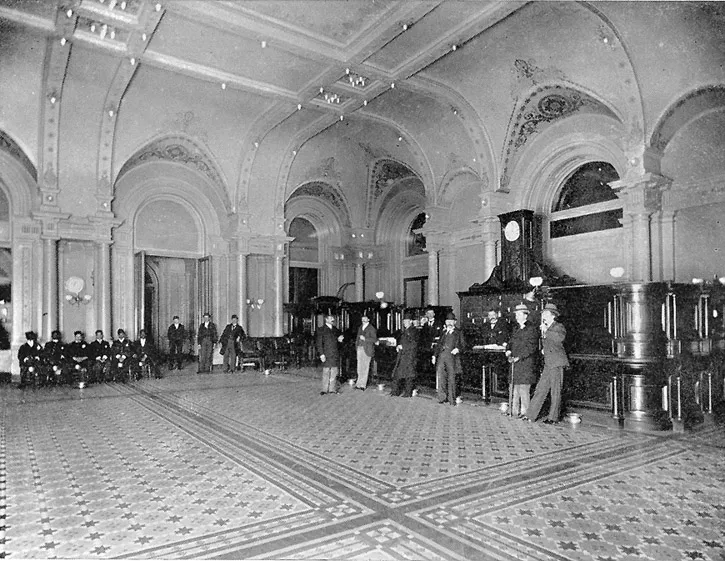
Photo: Centpacrr (Digital scan), Public domain, via Wikimedia Commons
Hotel desks are strange little stages. You have the passport, the booking confirmation, the faint memory of a card being charged in 2026, and a receptionist who has already said three things you didn't catch. The good news is that check-in is a repeatable script. Linkword hooks give you a handle: a silly picture that sticks to the phrase, so you can pull it out while your suitcase is still rolling.
Start with the booking, not the grammar
-
I have a reservation. Spanish: Tengo una reserva ('TEN-go OO-na reh-SER-va') — picture ten goals and one reserve team. French: J'ai une réservation ('zhay oon ray-zair-vah-SYON') — Jay reserves a ray of sun. Italian: Ho una prenotazione ('oh OO-na preh-no-tat-TSYO-neh') — ho ho, one pre-note.
-
My name is... Spanish: Me llamo... ('meh YAH-mo') — put mayo on a llama. French: Je m'appelle... ('zhuh mah-PELL') — you are not shampoo, you are je m'appelle. Italian: Mi chiamo... ('mee KYAH-mo') — me, with a key under my arm.
-
Do you have a room? Spanish: ¿Tiene una habitación? ('TYEH-neh OO-na ah-bee-tah-SYON') — ten-inch habitation. French: Avez-vous une chambre ? ('ah-vay VOO oon SHAHM-bruh') — avez means have, chambre means chamber. Italian: Avete una camera? ('ah-VEH-teh OO-na KAH-meh-rah') — a camera, but no lens.
-
I booked a double room. Spanish: He reservado una habitación doble — he reserves a double. French: J'ai réservé une chambre double — Jay reserved a double. Italian: Ho prenotato una camera doppia — doppia like a double espresso.
-
Is breakfast included? Spanish: ¿Está incluido el desayuno? — desayuno sounds like 'day soon, you know'. French: Le petit-déjeuner est-il inclus ? — petit is tiny; déjeuner sounds like 'day June'. Italian: La colazione è inclusa? — cola-zione: coffee and cola.
-
What time is breakfast? Spanish: ¿A qué hora es el desayuno? — a kay hora. French: À quelle heure est le petit-déjeuner ? — quelle hour. Italian: A che ora è la colazione? — a kay ora. All three begin with a little clock-word 'a'.
When the room fights back
-
The key card doesn't work. Spanish: La tarjeta no funciona — tarjeta is a target card. French: La carte ne marche pas — the card does not march. Italian: La tessera non funziona — tessera sounds like a tesseract card.
-
The room is too noisy. Spanish: La habitación es demasiado ruidosa — ruidosa is rude noise. French: La chambre est trop bruyante — bruyante is brewing tea loudly. Italian: La camera è troppo rumorosa — rumour means noise.
-
The air conditioning isn't working. Spanish: El aire acondicionado no funciona — air conditioner, nearly word for word. French: La climatisation ne marche pas — climate-isation. Italian: L'aria condizionata non funziona — conditioned air.
-
There's no hot water. Spanish: No hay agua caliente — agua is 'a gwa'; caliente is calorie-hot. French: Il n'y a pas d'eau chaude — chaude sounds like 'show-d', a hot show. Italian: Non c'è acqua calda — calda is calories, and calories are hot.
-
Could I have extra towels? Spanish: ¿Me puede dar más toallas? — toys for towels. French: Puis-je avoir des serviettes en plus ? — serviettes are towels here, not napkins. Italian: Posso avere degli asciugamani in più? — a shoe-gum, man!
-
The loo is blocked. Spanish: El baño está atascado — a task ado. French: Les toilettes sont bouchées — bouchées are blocked like a bottle brush. Italian: Il bagno è intasato — the loo is in a tizz.
-
Can I change rooms? Spanish: ¿Puedo cambiar de habitación? — cambiar means change. French: Puis-je changer de chambre ? — changer means change. Italian: Posso cambiare camera? — cambiare means change. One hook, three languages.
Breakfast, bags and the late-checkout ask
-
Can I have a late checkout? Spanish: ¿Puedo hacer el check-out más tarde? — más tarde means more tardy. French: Puis-je partir plus tard ? — plus tard means later. Italian: Posso partire più tardi? — tardi means tardy.
-
What time is checkout? Spanish: ¿A qué hora es la salida? — salida is the exit. French: À quelle heure est le départ ? — départ is departure. Italian: A che ora è la partenza? — partenza is departure.
-
Could you store my bags? Spanish: ¿Puede guardar mis maletas? — guard my maletas. French: Pouvez-vous garder mes bagages ? — garder means guard. Italian: Può tenere i miei bagagli? — picture a tennis bag with handles.
A late checkout is not a confrontation; it is a small negotiation. Ask early, smile, and offer to move your bags to the luggage room if the answer is no. The phrase más tarde, plus tard or più tardi is your polite lever.
Complaints that land politely
-
I'd like to make a complaint. Spanish: Quiero hacer una reclamación — claim a reclamation. French: Je voudrais faire une réclamation — same reclamation shape. Italian: Vorrei fare un reclamo — reclamo is a claim.
-
It's not acceptable. Spanish: No es aceptable. French: Ce n'est pas acceptable. Italian: Non è accettabile. The hook is almost too easy: accept-able.
-
Sorry for the trouble. Spanish: Perdón por las molestias — molestias are molesting your peace. French: Désolé pour le dérangement — a deranged arrangement. Italian: Mi scusi per il disturbo — disturbo means disturb.
-
Thank you, that's very kind. Spanish: Gracias, es muy amable — amable is amiable. French: Merci, c'est très gentil — gentil is gentle. Italian: Grazie, è molto gentile — gentile is gentle.
At the hotel desk, the trick is not to sound fluent. It is to sound calm enough to be helped. A daft picture of a llama in mayo, a target-shaped key card or a towel made of toys is doing more work than a grammar table ever will. Learn the hook, say the phrase, and let the receptionist meet you halfway.