Post Haste: Twenty Word Links for Stamps, Parcels and Queues Abroad
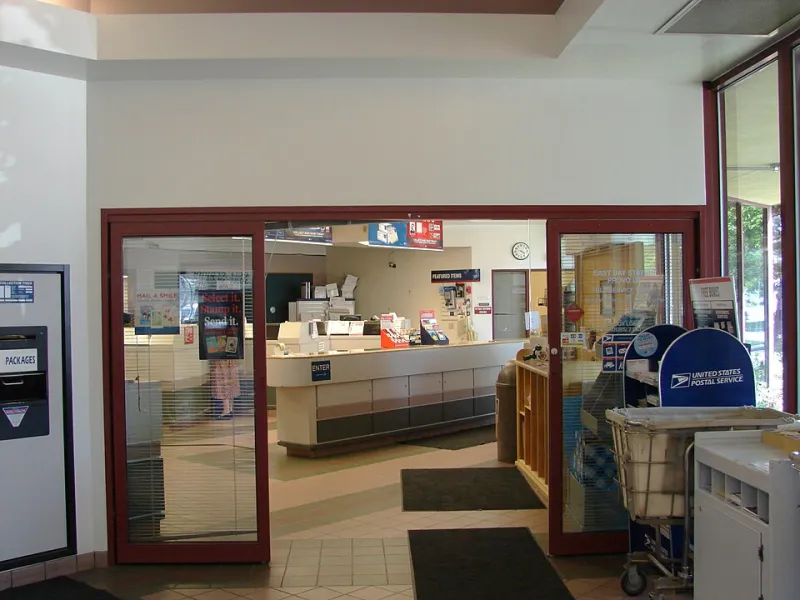
Photo: An Errant Knight, CC BY-SA 4.0, via Wikimedia Commons
A post office abroad is a strange little test of nerve. You arrive with a postcard, a parcel or a return label, and suddenly you are faced with strip lighting, a ticket machine and a counter assistant asking a question you did not revise. The vocabulary is mercifully small, though, and most of it repeats across Spain, France and Italy. Here are twenty sound-alike images to pin the essentials to your brain before you join the queue.
The building and the wait
1. oficina de correos / bureau de poste / ufficio postale — The place itself. In Spain, picture an office packed with couriers, because correos sounds like couriers. In France, imagine a bureau desk with a postbox bolted to it. In Italy, see a little postal train puffing through the ufficio. Silly? Yes. Sticky? Also yes.
2. cola / file d'attente / fila — Queue words. Spanish cola is a fizzy drink: imagine a line of people passing a bottle down the queue. French file d'attente sounds like feel the tent: you are feeling along a tent rope while you wait. Italian fila is a filler: the queue is the filler between you and the counter.
3. el número / le ticket / il numero — Many offices use a ticket system rather than one long snake of people. Picture a number doing a little dance on a screen. If you see a machine by the door, take a ticket before you browse the greetings cards, or you will be there until closing time.
4. sello / timbre / francobollo — Stamp. Spanish sello sounds like sell-o: imagine the assistant selling you a stamp with a dramatic O. French timbre sounds like timber: see a stamp carved from a plank. Italian francobollo sounds like Franco with a bollo, a bread roll: Franco is licking the stamp with a bun in his other hand.
5. tarjeta postal / carte postale / cartolina — Postcard. Spanish tarjeta sounds like target: picture a postcard pinned to a target. French carte postale is almost a cart with postal written on it. Italian cartolina sounds like a cart carrying a postcard. All three give you a picture of something flat going somewhere.
6. sobre / enveloppe / busta — Envelope. Spanish sobre sounds like sober: imagine a very serious envelope. French enveloppe is close enough to English to need no trick, but picture it enveloping a letter. Italian busta sounds like booster: an envelope giving a letter a boost.
Paper, parcels and the scales
7. paquete / colis / pacco — Parcel. Spanish paquete is a packet. French colis sounds like coal-ee: picture a parcel of coal. Italian pacco is a pack-o: a pack with an O on it. If you are sending something bulky, this is the word to have ready.
8. pesar / peser / pesare — To weigh. Spanish pesar sounds like press a: press a parcel onto the scale. French peser sounds like pez-air: imagine a fish being weighed in the air. Italian pesare sounds like pesa-ray: a ray of light hitting the scale.
9. balanza / balance / bilancia — Scales. All three are cousins of balance. Picture a tiny set of scales trying to balance a postcard and a parcel while a queue watches.
10. aduana / douane / dogana — Customs. Spanish aduana sounds like a dwana, almost a duvet: imagine a customs officer hiding under a duvet. French douane sounds like doo-an: a customs dog doing a doo-an impression. Italian dogana sounds like dog on a: a sniffer dog on a suitcase. Grimly memorable.
11. declarar / déclarer / dichiarare — To declare. All three are close to the English declare. Picture a customs form with a big declaration mark, and you saying the word slowly while pointing at your parcel.
12. correo aéreo / par avion / posta aerea — Airmail. Spanish correo aéreo is air courier. French par avion is the phrase you have seen on envelopes for years. Italian posta aerea is air post. If you want something to move faster than a postcard on a donkey, this is the phrase.
Sender, receiver and the official bits
13. certificado / recommandé / raccomandata — Registered or signed-for post. Spanish certificado is certified. French recommandé sounds like recommend: the counter assistant recommends you pay extra for tracking. Italian raccomandata has the same recommend feel. Useful when a passport or a document is in the envelope.
14. remitente / expéditeur / mittente — Sender. Spanish remitente sounds like remit, which is what you do when you send money or a parcel. French expéditeur sounds like expedite: the sender is the one who speeds it on its way. Italian mittente sounds like mitten: the sender is wearing mittens as they hand over the parcel.
15. destinatario / destinataire / destinatario — Recipient. All three sound like destination. The recipient is the destination of the parcel. Simple, but it saves a confused pause when the form asks for a name and address.
16. dirección / adresse / indirizzo — Address. Spanish dirección and French adresse are close to English. Italian indirizzo sounds like in a dress: picture an address label wearing a tiny dress. Whatever gets you to the right line on the form.
17. firma / signature / firma — Signature. Spanish and Italian firma sound like firm: a firm signature. French signature is identical to English. If you are collecting a parcel, expect to sign something, and possibly show photo ID.
18. frágil / fragile / fragile — Fragile. This one is a freebie across all three languages. Picture a box of eggs with a fragile sticker and a very nervous postcard balanced on top.
Collecting it and reading the slip
19. recoger / retirer / ritirare — To collect. Spanish recoger sounds like re-coger: you go back to cog the parcel off the shelf. French retirer sounds like retire: the parcel retires from the shelf into your hands. Italian ritirare has the same retire feel. If a parcel is waiting for you, this is the verb at the counter.
20. aviso / avis / avviso — Notice or slip. All three sound like a visa: imagine a little visa-sized slip telling you to collect your parcel. If one appears in your hotel letterbox, take it to the post office with ID.
A few local footnotes
In Spain, Correos offices are the main post offices, but stamps are also often sold at estancos, the tobacco kiosks, and sometimes at newsagents. In France, La Poste is the yellow-branded network, and tabacs often sell stamps too. In Italy, Poste Italiane offices can be busy and ticket-based, so take a number and keep your passport or ID handy for collections. None of this is a perfect rule, but it is enough to stop you trying to buy a stamp from a café till.
The trick with all twenty is not to learn them as a list. Pick the three or four you will actually need for your trip, say them out loud once, and attach the silly picture. By the time you reach the counter, the word should arrive before the panic.