Diesel Doubts and Blue Discs: 20 Memory Hooks for Forecourts and Parking Meters in Spain, France and Italy
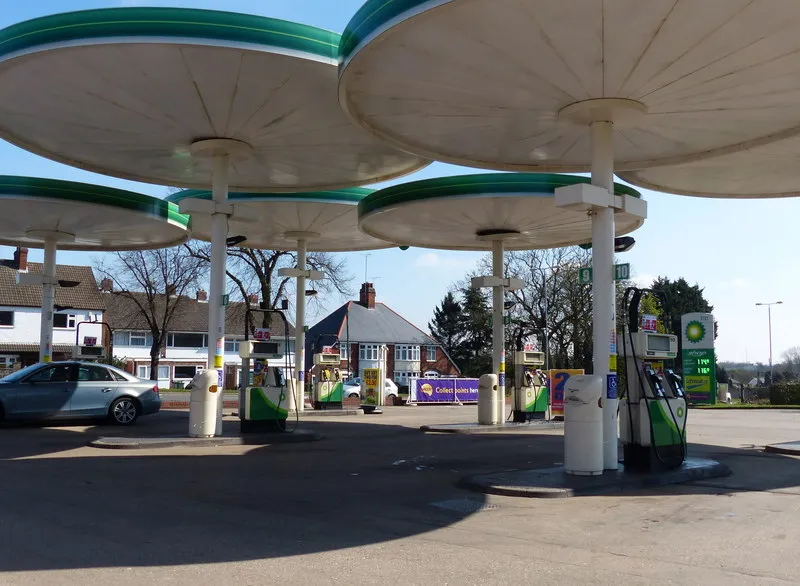
Photo: Mat Fascione, CC BY-SA 2.0, via Wikimedia Commons
British drivers are usually fine with a motorway services: fill up, pay, rejoin the slip road. Abroad, the forecourt can feel like a pub quiz with nozzles. The fuel names change, the kiosk conversation speeds up, and the parking meter has opinions. The good news is that you do not need a full language course to survive it. You need a handful of sound-alike hooks that stick in your head long enough to get you back on the road.
Here are 20 memory hooks for petrol stations, kiosks and kerbside parking in Spain, France and Italy. Say each one aloud once. The sillier it sounds, the more likely it is to be there when you are standing beside a pump with a hose in one hand and a bank card in the other.
First: petrol or diesel?
This is the big one. Putting the wrong fuel in a hire car is a costly way to start a holiday, so learn the three words that matter before you touch a nozzle.
- Gasolina / essence / benzina — petrol. Hook: gasolina has 'gas' in it, essence sounds like the essence of petrol, and benzina starts with 'Benz'—the sort of car that drinks petrol. If the word looks light and fizzy, it is petrol.
- Gasóleo / gazole / gasolio — diesel. Hook: gasóleo looks like 'gas-oil', but it is the heavy stuff. In France, gazole sounds like 'guzzle'; in Italy, gasolio sounds like 'oil for the grumble'. If the word looks oily, it is diesel.
- Sin plomo / sans plomb / senza piombo — unleaded. Hook: all three mean 'without lead'. Spot the plomo, plomb or piombo and relax: no lead, no drama.
- Lleno / le plein / il pieno — a full tank. Hook: le plein and il pieno sound like 'plenty'. Ask for plenty and you should get a full tank, not a tenner's worth.
At the pump and the kiosk
Some stations are self-service, some are supervised, and some have a kiosk that closes at lunchtime. These hooks cover the basics.
- Gasolinera / station-service / stazione di servizio — petrol station. Hook: gasolinera has 'gas' in it; French station-service is the service stop; Italian stazione di servizio is the same idea in a sharper suit. Look for the canopy and the price board.
- Caja / caisse / cassa — till or kiosk. Hook: all three start with a hard c/k sound. Picture your cash going into a caisse, like a case. That is where you pay.
- Pagar con tarjeta / payer par carte / pagare con carta — pay by card. Hook: tarjeta, carte and carta all mean card. Wave the card, say the word, and the message lands.
- Recibo / reçu / ricevuta — receipt. Hook: recibo is what you receive; reçu means received; ricevuta is the receipt you receive. Keep it—useful for expenses, parking proof and hire-car paperwork.
- Fai da te / servito — self-service / served. Hook: fai da te sounds like 'do it yourself' because that is what it means. Servito means service, so an attendant does the nozzle. In Italy, the price difference is often shown on the sign; point at the pump and choose your adventure.
Parking: blue zones, discs and meters
Parking rules change from town to town, but the vocabulary repeats. Learn the blue-zone words and you will avoid the classic British driver's mistake: assuming an empty kerb is a free kerb.
- Aparcamiento / parking / parcheggio — parking. Hook: Spanish aparcamiento sounds like 'a park meant oh'; French parking is a lucky freebie for English speakers; Italian parcheggio has 'park' plus a double g, like the echo in a concrete car park.
- Zona azul / zone bleue / zona blu — blue zone. Hook: blue means controlled. Think blue disc, not blue badge. If the kerb is painted blue, check the sign before you leave the car.
- Disco horario / disque de stationnement / disco orario — parking disc. Hook: disco and disque both mean disc. Set your arrival time and put it on the dashboard. No disc, no defence.
- Parquímetro / parcmètre / parcometro — parking meter. Hook: metro, metre and parcometro all measure your stay. Feed it, tap it, or use the local app—but do not guess.
- Validar el ticket / valider le ticket / convalidare il biglietto — validate the ticket. Hook: valid, valider and convalidare all mean 'make valid'. In shopping-centre car parks, stamp or scan the ticket before you shop, or the barrier will refuse to budge.
- No estacionar / stationnement interdit / divieto di sosta — no parking. Hook: sosta means stop. Divieto di sosta means no stopping. If you see it, keep rolling.
- Grúa / fourrière / carro attrezzi — tow truck or pound. Hook: grúa sounds gruesome; fourrière is where your car goes 'further away'; carro attrezzi is the car-wrecker. All three are bad news for the hire-car deposit.
Tolls, change and the quick extras
Toll booths and payment machines are where a calm driver becomes a fumbling one. These last hooks keep the queue moving.
- Multa / amende / multa — fine. Hook: multa sounds like 'multiple euros'; amende starts with 'a mend'—you will be mending your budget. Best avoided.
- Peaje / péage / pedaggio — toll. Hook: peaje sounds like 'pay-age'; péage sounds like 'pay'; pedaggio sounds like 'pay-daggio'. All three want money at the barrier.
- Efectivo / espèces / contanti — cash. Hook: efectivo is effective cash; espèces sounds like 'specie', an old word for coin; contanti is counted out. Handy when the card machine is having a sulk.
- Cambio / monnaie / resto — change. Hook: cambio means change; monnaie means money; resto means the rest. Ask for cambio or resto, and in France listen for monnaie.
Before you turn off the sat-nav
A few local quirks are worth knowing. In Italy, many stations offer both 'fai da te' and 'servito', and the served price is higher—useful if you want help and do not fancy nozzle gymnastics. In France, automated pumps outside hours may be card-only, and some machines ask for a postcode; if yours fails, try 00000 or go inside. In Spain, blue zones are often run by the local council or an app, and the ticket or disc must be visible. In all three countries, tolls accept cards on most main routes, but a little cash is no bad thing on a Sunday night.
The trick is not to memorise a dictionary. It is to carry a few ridiculous links that surface under pressure. Gasóleo is the grumble-oil. Peaje is pay-age. Fourrière is further away. Say them in the queue, say them at the pump, and say them again when you park. Your holiday does not need perfect grammar. It just needs the right nozzle, a valid ticket and a receipt you can find later.