Count Yourself Lucky: 20 Number Hooks for Prices, Clocks and Tickets Abroad
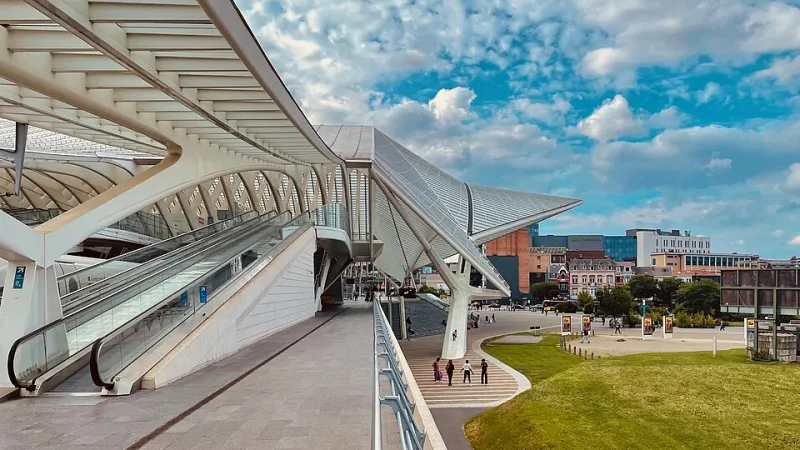
Photo: Japplemedia, CC BY-SA 4.0, via Wikimedia Commons
Numbers abroad have a habit of turning up when you are hungry, late or standing at a ticket machine with a queue behind you. The good news is that you do not need to recite a conjugation table to buy a coffee. You need a handful of sticky sounds and a bit of nerve. Here are 20 linkword hooks for prices, clock times and tickets in Spanish, French and Italian — the sort of thing you can learn on the train to the airport.
First, the price tags
1. Spanish: ¿Cuánto cuesta? (how much?)
Cuanto sounds like 'count' and cuesta like 'quest': start a little counting quest. In shops, the price is the price; in markets, a friendly question may soften things, but do not turn a fruit stall into a car-boot haggling session.
2. French: trop cher (too expensive)
Trop cher sounds like 'tray chair'. If the price seems to include the chair, it is too expensive. French markets may flex a little; supermarkets and chain shops will not.
3. Italian: troppo caro (too expensive)
Caro sounds like 'car-o'. You are not buying the car, just the espresso. A smile and a shrug go further than a dramatic gasp.
4. Spanish: cien (hundred)
Picture a hundred scene extras crowded into a film shot. Cien equals a hundred — useful when a menu, museum board or market sign jumps from tens to hundreds.
5. French: quatre-vingts (eighty)
Four twenties doing a conga. France counts in twenties here, so quatre-vingts is literally four twenties. Weird at first, oddly memorable after one silly image.
6. Italian: mille (thousand)
A mille-feuille has a thousand layers; a price with three zeros has a thousand units. Mille is your shortcut when ticket prices suddenly look like phone numbers.
Clock-watching and shutter hours
7. Spanish: abierto (open)
A beer-to: open for a beer. If the sign says abierto, the door is inviting you in rather than sending you next door.
8. Spanish: cerrado (closed)
Sir-rah-doh: the shutters are down, sir. In smaller Spanish towns, the afternoon siesta still closes shops and kitchens, often roughly 2pm to 5pm. Big cities are livelier, but do not assume every backstreet bakery is immune.
9. French: fermé (closed)
Fair may: the fair may be shut on a Monday. Many French museums and restaurants close on a Monday or Tuesday, so check before you build a day around one.
10. Italian: chiuso (closed)
Key-oo-so: the key has gone, so the place is shut. It is the word that saves you from rattling a locked door in a heatwave.
11. Spanish: mediodía (midday)
The middle of the day, when the sun is at its loudest. Mediodía is not just a time; it is a warning that lunch and shutters may be about to happen.
12. French: midi (midday)
Think of a MIDI keyboard playing at noon. Midi is the middle marker, and on French timetables it sits comfortably beside 12h00.
13. Italian: mezzogiorno (midday)
Mezzo means half and giorno means day: half the day gone. If a shop says it reopens after mezzogiorno, you have time for a coffee rather than a meltdown.
14. French: quinze heures (3pm)
Canz-err: fifteen hours after midnight. French transport timetables often use the 24-hour clock, so 15h00 is 3pm — not a mysterious extra hour.
15. Italian: alle otto (at eight)
Otto the octopus has eight arms and is always on time. Alle otto means at eight, whether that is a train, a tour or the first ferry.
Tickets, machines and platforms
16. Spanish: billete (ticket)
Bill-ete: a little bill for your journey. Keep it with you on buses and trains; inspectors are not impressed by a ticket left in the hotel room.
17. French: aller-retour (return ticket)
Alley-return: go down the alley and come back. Aller means go, retour means return. It is the phrase that stops you buying two singles by accident.
18. Italian: andata e ritorno (return ticket)
On-data and return: buy the data, get the journey back. Andata is the outward leg, ritorno is the way home.
19. French: distributeur (ticket machine)
A distributor of tickets. At French stations, look for the machine with the British flag or an English button; many are card-first, and some rural machines can be surprisingly fussy about notes.
20. Italian: binario (platform)
Binary: platform one or zero. Binario is your platform number, and it is worth double-checking the departure board because Italian stations can change a platform with the calm of a chess move.
The takeaway
You do not need to count fluently to feel less like a tourist in a fog. Learn six of these hooks and you can read a price, catch an opening hour and buy the right ticket. The rest can be picked up at the counter — ideally with a smile and the correct change.