Departure Board Decoders: 25 Linkword Hacks for Spanish, French and Italian Train Stations
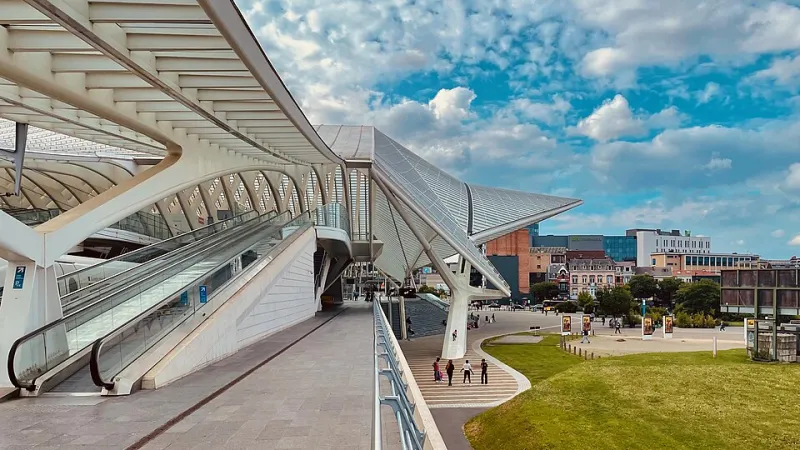
Photo: Japplemedia, CC BY-SA 4.0, via Wikimedia Commons
A station is a language exam with luggage. The departure board is not trying to be difficult, but it can feel that way when you are juggling a rucksack, a coffee and a ticket machine that wants a postcode. Linkwords help because they turn each unfamiliar term into a tiny scene you can recall under pressure. Here are 25 hooks for Spanish, French and Italian stations.
Tickets and timetables
-
billete / billet / biglietto — ticket. At the machine, picture a bill with a ticket stapled to it: 'bill-yet' in Spanish, 'bill it' in French, 'bill-yet-oh' in Italian. The machine wants payment; you want the paper.
-
taquilla / guichet / biglietteria — ticket office. Spanish taquilla is the 'ticket kiosk'; French guichet is the 'goo-shay' window where you slide your request; Italian biglietteria is the 'bill-yet area'. Head there when the machine sulks.
-
horario / horaire / orario — timetable. Spanish horario sounds like 'horror-yo' — the horror of missing the last train. French horaire is 'or-air', the times hanging in the air. Italian orario is 'hour-ario', your hourly plan.
-
ida / aller / andata — one-way. Spanish ida is the 'idea' of going one way. French aller is 'allow' me on. Italian andata is 'and data' — one direction of the journey.
-
ida y vuelta / aller-retour / andata e ritorno — return. Spanish vuelta is a vulture coming back; French retour is the English 'return'; Italian ritorno is 'return-o'. Say it twice if needed.
-
sencillo / simple / semplice — single ticket. Spanish sencillo and French simple are both 'simple'; Italian semplice is 'simple' with an Italian shrug. One journey, one ticket.
-
reserva / réservation / prenotazione — reservation. Spanish reserva and French réservation are close to English. Italian prenotazione is a 'pre-note' — you noted it before you arrived.
-
¿A qué hora sale? / À quelle heure part? / A che ora parte? — what time does it leave? Link 'sale' and 'part' to departure: the train parts from the platform.
Platforms and carriages
-
andén / voie / binario — platform. Spanish andén is 'on the' platform; French voie is the 'voice' over the speaker; Italian binario is 'binary' — two rails, one platform.
-
coche / voiture / carrozza — carriage. Spanish coche is a coach; French voiture is a 'vw auto'; Italian carrozza is a carriage. Match the number on your ticket.
-
asiento / siège / posto — seat. Spanish asiento is 'a seat'; French siège is a 'siege' you sit in; Italian posto is your post for the journey.
-
transbordo / correspondance / coincidenza — connection. Spanish transbordo is a 'transfer board'; French correspondance is a correspondence between trains; Italian coincidenza is a happy coincidence if it works.
-
cambio de andén / changement de voie / cambio binario — platform change. Picture a board doing a U-turn. The phrase is your warning to look up.
-
cercanías / RER / regionale — local or suburban train. Spanish cercanías is 'circle near' — the train that loops nearby. French RER is the city network; Italian regionale stays in the region.
Announcements, delays and Plan B
-
retraso / retard / ritardo — delay. Spanish retraso is 're-trace slow'; French retard is 're-tard'; Italian ritardo is 'rear-tardy'. The train is late, not you.
-
aviso / avis / avviso — notice. Spanish aviso is 'a visa' of information; French avis is 'a visa' too; Italian avviso is 'a visa oh'. Listen for the announcement.
-
huelga / grève / sciopero — strike. Spanish huelga sounds like 'well, ga!' — plans change. French grève is 'grev'; Italian sciopero is 'shop zero' — shops and trains may stop. Check before you travel.
-
destino / destination / destinazione — destination. Spanish destino is destiny; French destination is obvious; Italian destinazione is the destination with a flourish.
-
llegada / arrivée / arrivo — arrivals. Spanish llegada is 'yay, got there'; French arrivée is 'arrive'; Italian arrivo is a river flowing in.
-
salida / sortie / uscita — exit. Spanish salida is the 'salad' door out; French sortie is a sortie out; Italian uscita is 'you shoot out'.
-
equipaje / bagages / bagagli — luggage. Spanish equipaje is your 'equipage'; French bagages is baggage; Italian bagagli is 'bag ally'. Keep it close.
-
consigna / consigne / deposito bagagli — left luggage. Spanish consigna is a 'console sign'; French consigne is a 'con sign'; Italian deposito is a deposit. Drop the bags, free your hands.
-
¿Dónde está...? / Où est...? / Dov'è...? — where is...? Spanish dónde is 'down day' — where is it, down there? French où est is 'where est'; Italian dov'è is a dove flying to the place.
-
llegar / arriver / arrivare — to arrive. Spanish llegar is 'yay, get there'; French arriver is arrive; Italian arrivare is arrive with an Italian ending.
-
andén número / voie numéro / binario numero — platform number. Picture the number painted on the platform: 'on the' number, the 'voice' number, the 'binary' number. Then walk, don't sprint.
The trick is not fluency; it is confidence. A handful of these hooks can turn a confusing station into a series of manageable moments — and get you onto the right train with your luggage, your dignity and your coffee intact.