The Corner Shop Test: 20 Linkword Hooks for Asking Directions Abroad
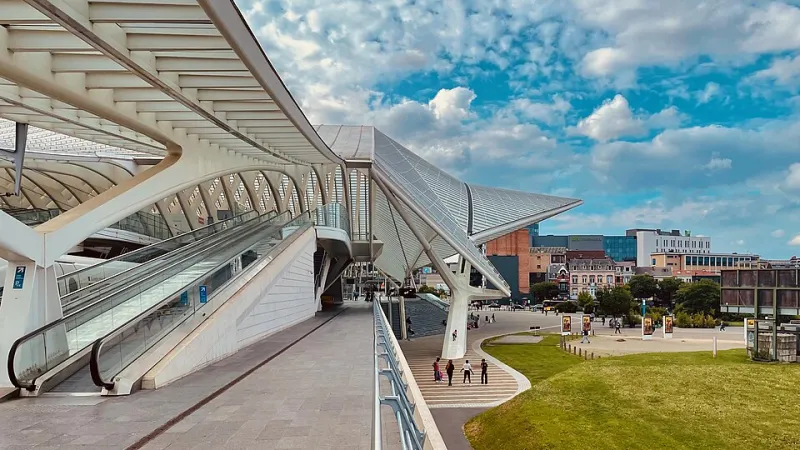
Photo: Szombat78, CC0, via Wikimedia Commons
Getting lost in a foreign city is not a failure of character. It is a failure of signage. The answer is not to memorise a map, but to attach a daft image to the words that appear on signs and in the answer you'll get from a stranger. At Linkword Languages we call this the corner-shop test: if you can remember where the corner shop is back home, you can remember 'corner' abroad.
First, stop a stranger politely
-
Excuse me. Spanish: Perdón or Disculpe. French: Excusez-moi. Italian: Mi scusi. Hook: scusi sounds like 'excuse me' with a shrug.
-
Where is...? Spanish: ¿Dónde está...? French: Où est...? Italian: Dov'è...? Hook: Dov'è begins like 'dove' — imagine a dove hovering over the place you want.
-
How do I get to...? Spanish: ¿Cómo llego a...? French: Comment aller à...? Italian: Come arrivo a...? Hook: llego and arrivo both mean 'I arrive' — you are already arriving in your head.
-
I'm lost. Spanish: Estoy perdido. French: Je suis perdu. Italian: Mi sono perso. Hook: all three sound faintly like 'poor' — picture a poor lost tourist with a paper map.
The four words that do the heavy lifting
-
Left. Spanish: izquierda — Izzy's weird left ear. French: gauche — go shh, then turn left. Italian: sinistra — the sinister left turn.
-
Right. Spanish: derecha — Derek's right hand. French: droite — draw it to the right. Italian: destra — dexterous right hand.
-
Straight on. Spanish: todo recto — direct-o. French: tout droit — too drwah. Italian: sempre dritto — straight dritto.
-
Turn. Spanish: girar or gire. French: tourner. Italian: girare. Hook: gyrate at the junction.
Landmarks are memory pegs
-
Square. Spanish: plaza. French: place. Italian: piazza. Hook: piazza is a pizza-shaped square. You will find one, and it will have a fountain.
-
Church. Spanish: iglesia — an igloo church. French: église — egg-lees. Italian: chiesa — key-esa. Pick the one that sticks and the spire will do the rest.
-
Bridge. Spanish: puente. French: pont. Italian: ponte. Hook: pont is a pontoon bridge.
-
Station. Spanish: estación. French: gare. Italian: stazione. Hook: gare sounds like 'guard' — guard the station entrance.
-
Bus stop. Spanish: parada. French: arrêt. Italian: fermata. Hook: fermata is a firm stop; the bus will not move until you say so.
-
Roundabout. Spanish: rotonda. French: rond-point. Italian: rotonda. Hook: round equals rotonda. No shame in saying it with a circle in the air.
-
Traffic lights. Spanish: semáforo. French: feux. Italian: semaforo. Hook: semaphore with a red light.
Distance, corners and the answer you'll hear
-
Nearby. Spanish: cerca. French: près. Italian: vicino. Hook: vicino is your vicinity.
-
Far. Spanish: lejos. French: loin. Italian: lontano. Hook: lontano is a long way off.
-
Corner. Spanish: esquina. French: coin. Italian: angolo. Hook: coin is a corner; angolo is an angle. The corner-shop test now applies abroad.
-
Opposite, next to, behind. Spanish: enfrente, al lado de, detrás. French: en face, à côté de, derrière. Italian: di fronte, accanto a, dietro. Hooks: en face and di fronte mean in front or opposite; côté and lado mean side; derrière and dietro mean rear.
-
Can you show me on the map? Spanish: ¿Puede mostrarme en el mapa? French: Pouvez-vous me montrer sur la carte ? Italian: Può mostrarmi sulla mappa? Hook: mapa, carte and mappa all sound like map if you squint.
Why mime and maps still matter
Mime is not a failure. It is a backup language. Point at your wrist for 'what time', hold up fingers for numbers, and draw a circle on your palm for roundabout. A paper map or offline map still matters because pronunciation can bend and battery can die. Ask the question, then repeat the answer back: À gauche? Izquierda? Sinistra? The stranger will correct you, and correction is free language practice.
British reserve can make you apologise to a lamppost rather than trouble a stranger, but a short Perdón, Excusez-moi or Mi scusi is usually welcome. Keep the question small, listen for the landmark, and accept that the answer may come with a gesture, a shrug and a point. That is not a language fail. That is a conversation.